Water delivery · 5 company-owned vessels
Bulk diesel delivery by vessel
GCITI delivers bulk commercial diesel by water on its own vessels, to river and coastal delivery points across Guyana. It is how fuel reaches operations the road network does not serve — and the reason a site off the road is not a site GCITI has to turn away.
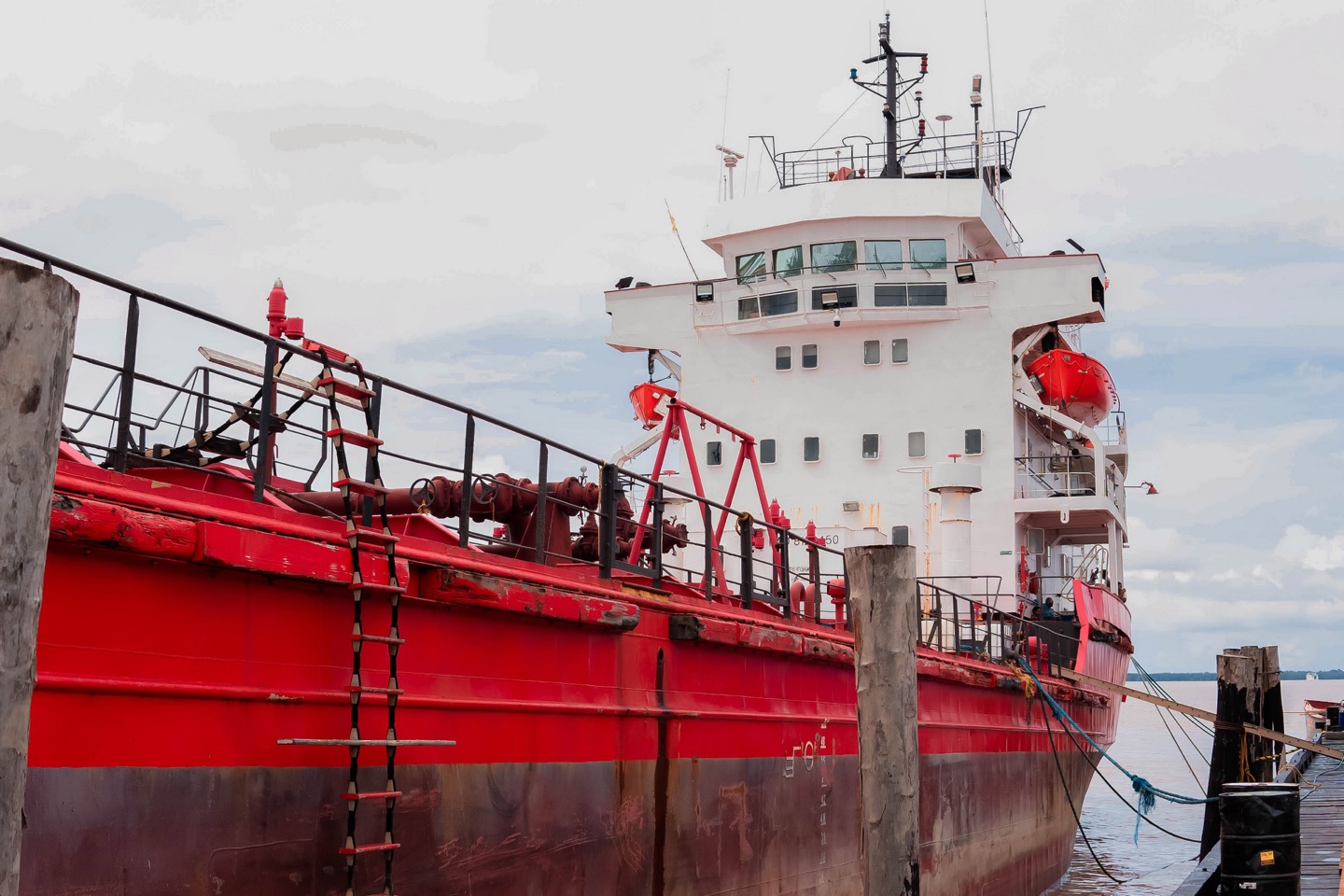
Draft decides reach
For a delivery on the water the first question is not how much a vessel carries. It is how much water she needs. Capacity matters second.
| Vessel | Liquid capacity | Published draft | IMO |
|---|---|---|---|
| Candy Carrier | Deck cargo | 13 ft light | 8010063 |
| Candy Cruiser | 211,000 gal | 9 ft light | 8203048 |
| Candy Coaster | 230,000 gal | 7.5 ft light | 7807562 |
| Candy Caribe | 400,000 gal | 12 ft light | 7417159 |
| Candy Conqueror | 715,000 gal | 4.6 m loaded | 8129450 |
Light draft is the unladen figure. What has to fit your berth is the laden draft of the hull carrying your volume, which is confirmed with the quote. Send us the depth at your point and we will tell you which vessels can work it.
What your delivery point needs
Six things decide whether a vessel can complete a delivery at your point. Worth settling before you order rather than on the day.
- 01
Water enough
Depth at your berth at the state of tide you can work. This is the first question and usually the deciding one — a vessel's laden draft is what has to fit, not her light draft.
- 02
Somewhere to lie
A berth, jetty or mooring a vessel can come alongside and stay at safely while she discharges.
- 03
A reachable connection
Your receiving point within reach of the hose from where the vessel lies.
- 04
Receiving capacity
What your tank holds and how fast it takes fuel — discharge is only as quick as the receiving end.
- 05
Someone to receive
A person at the point who can take the delivery and sign for it.
- 06
A clear working area
The transfer area kept clear of ignition sources and other traffic while it is under way.
Where it matters most
The most remote of the four. Road access from the coast is limited, so supply into Region 1 runs by water. Mining, forestry and farming operations that a truck out of Georgetown cannot reach.
The tanker
Candy Conqueror carries 715,000 gallons across 83 metres, with a double hull, classed IRS-Guyana, and a Q88 on file. IMO 8129450 · MMSI 750000053 · 8R-TZ
How a marine delivery is arranged
- 01
Send the delivery point
Where on the water, what volume, and what you are receiving into.
- 02
We check the water
Depth, access and berthing against the hull that suits the volume.
- 03
Quote
Priced against the volume, the point and the market on the day.
- 04
The voyage
GCITI's own vessel and crew, from load to your delivery point.
- 05
Discharge and sign-off
Quantity confirmed and the delivery documented with whoever receives it.
Transfers are attended throughout, with firefighting equipment stationed at the operation and marked muster and emergency-shutdown points. GCITI operates to the requirements of the International Maritime Organization, including the ISM Code and SOLAS. Safety and compliance.
Questions buyers ask about marine delivery
Does GCITI deliver diesel by water?
Yes, on its own vessels. GCITI operates 5 hulls with 1,556,000 gallons of published liquid capacity between the four that carry it, crewed and operated by the company rather than chartered in.
Can you reach my berth?
Draft decides it. The shallowest published light draft in the fleet is 7.5 feet, on Candy Coaster, and the operative figure for your delivery is the laden draft of whichever hull carries it. Send us the depth at your point and we will tell you which vessels can work it.
How much can one vessel deliver?
Published liquid capacities run from 211,000 gallons to 715,000 gallons depending on the hull. Particulars for each are on the fleet pages.
Is the tanker double-hulled?
Yes. Candy Conqueror is double-hulled, classed with IRS-Guyana, and carries a Q88 on file — IMO 8129450, call sign 8R-TZ.
Where does water delivery matter most?
Region 1, Barima-Waini. Road access from the coast is limited, so supply into the north-west runs by water — a road-only supplier cannot serve it at all.
Do you own the vessels or charter them?
GCITI owns and operates them, and crews them itself. You are dealing with the operator rather than a broker between you and the vessel.
What if my site is better served by road?
Then it goes by road. The mode is chosen against your delivery point rather than assumed, and GCITI runs both fleets so neither answer costs you a supplier.
Plan a marine delivery
Delivery point, depth, volume and what you are receiving into.