Every voyage starts with checks
Flag, class, crew, vessel, cargo and route are checked before departure. GCITI operates to the requirements of the International Maritime Organization, including the ISM Code and SOLAS.
How we operate
Before departure
Vessel, cargo and route are checked against the voyage before a line is let go. Crew are briefed on the cargo they are carrying and the ports they are working.
During cargo operations
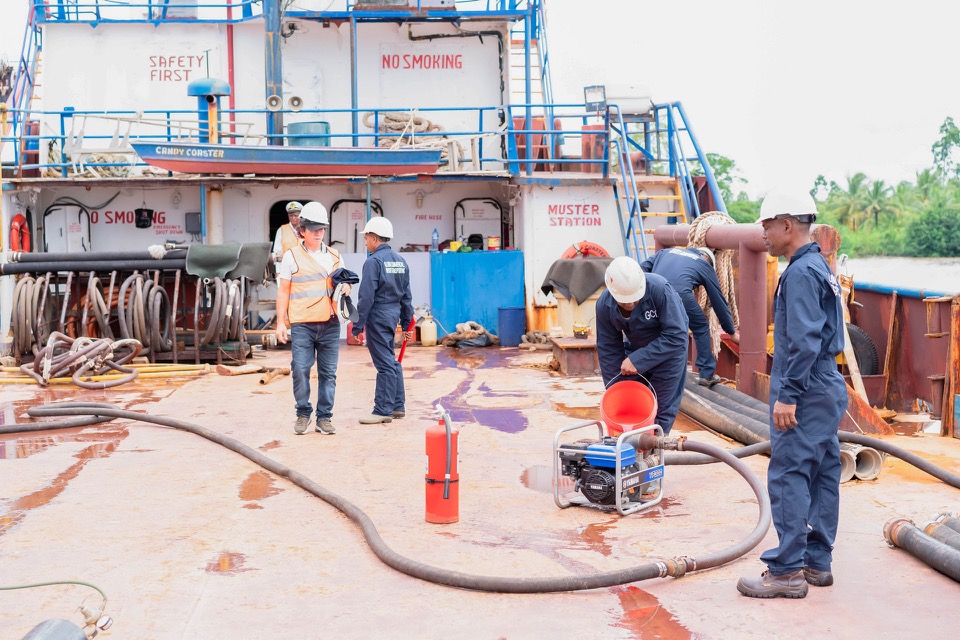
Transfers are attended throughout, with firefighting equipment stationed at the operation, marked muster points and emergency shutdown, and no smoking enforced across the deck.
Pollution prevention
Liquid cargo is carried under IMO requirements, and our largest tanker is double-hulled. Waste oil is moved under the same standards as any other cargo we carry.
Around the fleet
Vessels are Guyana-flagged and insured, and our classed hulls are surveyed under IRS. Dimensions, capacities and class for each hull are on the fleet pages.
Documentation for charterers
Charterers, brokers, insurers and procurement teams can request vessel and company documentation directly from marine operations. Tell us which vessel and what you need it for, and we will send what applies to your enquiry.
- Vessel particulars and dimensions
- Class and flag documentation
- Insurance details
- Q88, where held for the vessel
- Cargo handling and transfer arrangements
Request documentation
Tell us the vessel and what you need it for.